
Is a heat pump water heater right for your home?

Thinking about replacing your old water heater? Good news — heat pump water heaters (HPWHs) might just be one of the smartest, most reliable investments you can make for comfort, savings and peace of mind.
Here’s what we’re going to cover in this article to help you decide whether or not a heat pump water heater is right for your home:
- A (very) brief history of heat pumps.
- How’s a heat pump water heater different from an electric resistance or gas water heater?
- Key benefits of heat pump water heaters.
- Types of residential heat pump water heaters.
- Installation best practices.
- Myths about heat pump water heaters.
- Market trends.
A (very) brief history of heat pumps.
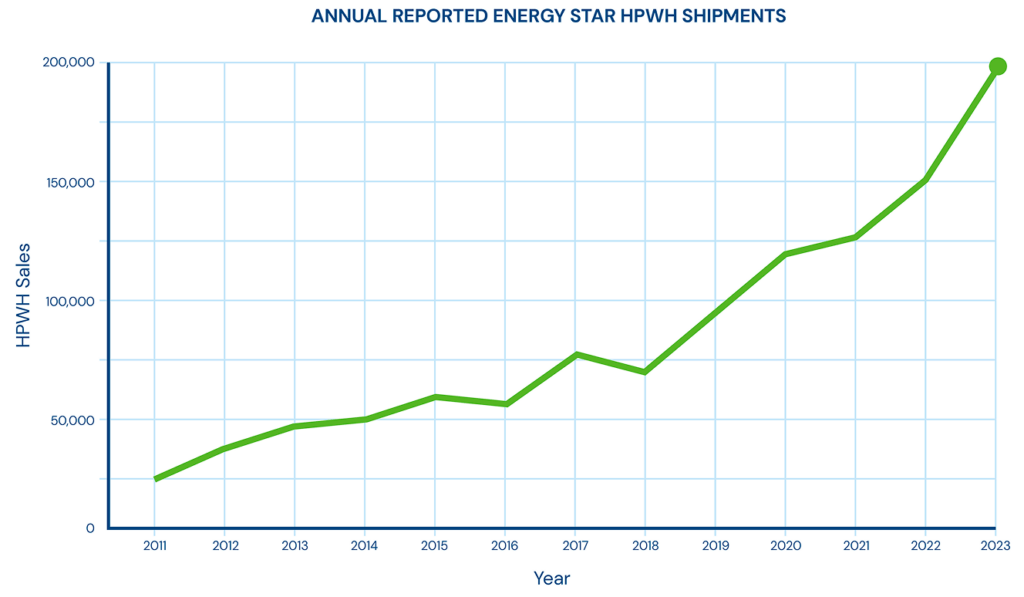
Heat pump technology has roots in the 1850s. Commercial heat pump water heaters appeared in the early 1950s, and the energy crisis of the 1970s renewed interest in the technology. The technology has continued to improve ever since. According to the New Buildings Institute, HPWH shipments grew 35% in 2023, making them the fastest-growing water heater type that year.
How’s a heat pump water heater different from an electric resistance or gas water heater?
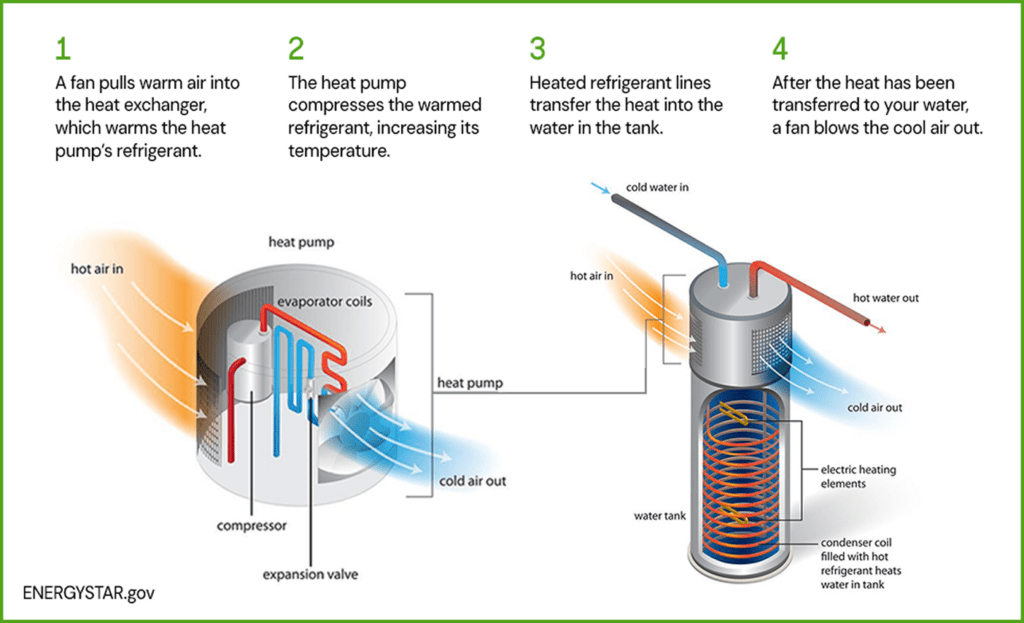
It’s all about how they work. It’s ingenious, really. Instead of generating heat through combustion or electrical resistance — like a conventional water heater — HPWHs transfer heat, using a compressor and refrigerant.
They’re kind of like your refrigerator, except running in reverse. Instead of fighting the cold by heating water, they pull warmth from the air around them and transfer it into your water tank.
6 top benefits of heat pump water heaters.
#1. Energy savings
ENERGY STAR certified HPWHs use up to 70% less energy than standard electric resistance water heaters. ENERGY STAR estimates that a household of four could save approximately $550 per year on electric bills. Actual savings depend on your electricity rates, hot water use, model and installation.

#2. Rebates and incentives
Homeowners served by a TVA local power company can save $900 on a qualifying ENERGY STAR certified heat pump water heater’s at participating retailers. Get your retail coupon before checkout and check the current qualifying product and retailer lists. The offer is limited to two units per address.
#3. Longevity
According to ENERGY STAR, HPWHs have similar life spans to electric storage water heaters, and many models come with 10-year warranties. Follow the manufacturer’s maintenance instructions to help keep your unit working efficiently.
#4. Improved air quality
HPWHs do not create toxic combustion exhaust gases, such as carbon monoxide. And, because they don’t rely on combustion they minimize the risk of fire or explosion that can be caused by a fuel-fired water heater or associated gas piping.
#5. Increased control
Many models allow access to settings — such as temperature setpoints and operational modes — via a digital control panel or app.
#6. Reduced carbon footprint
Using less energy to heat water can also reduce your household’s carbon footprint. ENERGY STAR notes that efficient electric HPWHs can reduce water-heating emissions even where grid electricity is carbon-intensive. The reduction depends on the water heater you replace and how your electricity is generated.
Types of residential heat pump water heaters.
There are a few different types of HPWHs, each designed for different types of homes and needs. Here are two kinds of systems that work well in our region:
Unitized 240v hybrids
The most common type of HPWH, these hybrid systems combine the flexibility of electric resistance heat with the benefits of an integrated heat pump water heater. These are great options for households with high hot water demands.
Split systems
As the name indicates, the heat pump is separate from the water tank, allowing for more flexibility in placement and installation. A solid option for tighter spaces.
Installation best practices.
To perform efficiently and reliably, HPWHs need adequate airflow. ENERGY STAR notes that manufacturers typically require access to at least 450 or 700 cubic feet of free air space, or suitable ventilation. For example, an 8×12 ft room with an 8-ft ceiling provides 768 cubic feet before accounting for equipment and other contents. Smaller spaces may work with approved louvers, transfer grilles or ducting. Always follow your model’s installation requirements!
Why so much space? HPWHs draw in air to extract heat. A cramped closet without adequate airflow can reduce efficiency and increase reliance on electric resistance backup. Have your installer confirm that the room or ventilation arrangement meets the manufacturer’s requirements.
Since HPWHs draw warmth from the surrounding air, the installation location must stay within your model’s specified operating temperature range. ENERGY STAR describes an approximate ambient range of 40–120°F for integrated HPWHs, but requirements vary by model. A sufficiently large laundry room can be a good location, as waste heat from appliances can help the unit operate efficiently.
Although today’s HPWHs are significantly quieter than their predecessors, installers should avoid placing them next to bedrooms or home offices.
Finally, don’t forget about condensate! Your unit will produce water that you’ll need to drain away, using a floor drain or a condensate pump.
A member of TVA EnergyRight’s Quality Contractor Network can help ensure your new water heater is installed for maximum efficiency.
Busting a few myths about heat pump water heaters.
Heat pump water heaters are too noisy!
HPWHs have a fan and compressor that make some noise. ENERGY STAR describes sound levels of approximately 45–55 dBA, similar to a dishwasher or background conversation, with quieter models available. Sound varies by model, so compare ratings and avoid locations next to bedrooms or other quiet spaces.
They’re too expensive to service.
Many HPWHs come with 10-year warranties, but coverage and service costs vary by model. Check whether the warranty covers parts, labor and service visits, and follow its maintenance requirements. If your plumber does not service the heat pump components, contact the manufacturer for help finding a qualified service provider.
They’ll make my house too cold and increase heating costs.
HPWHs release cool, dry air around the unit. ENERGY STAR reports that the cooling effect is generally small and localized, though it can increase space-heating demand in conditioned areas. With an efficient heating system and proper installation, water-heating savings can outweigh that additional demand. Keep the cool exhaust away from thermostats and temperature-sensitive occupied areas.
Keep the air filter clean and follow the manufacturer’s maintenance schedule. Correct installation and regular maintenance help support efficient operation over the life of the unit.
Market trends.
Questions?
Reach out to a member of the Quality Contractor Network to learn more about HPWHs. Don’t forget to ask about our instant rebate!
Related stories
-
 Residential
Air sealing and insulation tips to get your house knitted up for sweater weather.
View moreAs the golden days of summer give way to crisp autumn mornings and icy winter evenings, now is the perfect time to prepare your home for cool weather days. One of the most effective, affordable — and often overlooked — ways to stay cozy and reduce your energy bills by taking advantage of our DIY […]
-
 Residential
Your home energy efficiency playbook.
View moreWhether you’re a renter, homeowner or landlord who’s considering upgrading aging systems, understanding the fundamentals of home energy efficiency is important. We’re working closely with local power companies throughout the seven-state Tennessee Valley region to help people like you lower your energy bills with energy-saving recommendations, rebates and more.
-
 Residential
10 signs your home is losing heat this fall.
View moreYou know what the best season is? It’s shoulder season. That’s the magical in-between time of the year when you start the day in your favorite hoodie, spend the afternoon in flip-flops and end the day back in that fuzzy sweatshirt. Best of all: That season is now! However, as the days begin flip-flopping between […]